

As GLP-1–based therapies continue to evolve, the conversation around metabolic treatment has shifted. The question is no longer whether these medications work, but which one aligns best with an individual’s metabolic profile, tolerability, and long-term strategy.
When weight loss slows, it is tempting to assume that newer, multi-receptor drugs must be superior. Yet the comparison between retatrutide vs tirzepatide vs semaglutide suggests otherwise. Semaglutide offers focused, well-established GLP-1 efficacy, tirzepatide balances added GIP activity with real-world tolerability, while retatrutide pushes maximal weight loss through triple-agonist intensity often with higher physiological demand.
However, emerging clinical data and real-world treatment patterns suggest a more nuanced reality:
- More receptor targets do not automatically translate into better outcomes
- Effectiveness is shaped less by pharmacological complexity and more by alignment with metabolism, side-effect tolerance, adherence capacity, and timing
This article examines semaglutide, tirzepatide, and retatrutide not as competitors in a race for the strongest drug but as distinct metabolic tools suited to different physiological contexts.
Understanding the Core Difference: Receptor Targets in Context

All three medications belong to the GLP-1 therapy family, yet they differ meaningfully in how they influence appetite regulation, insulin signaling, and energy balance.
| Medication | Receptors Activated | Primary Metabolic Effects |
| Semaglutide | GLP-1 | Appetite regulation, indirect insulin sensitivity |
| Tirzepatide | GLP-1 + GIP | Appetite suppression plus enhanced insulin and fat signaling |
| Retatrutide | GLP-1 + GIP + Glucagon | Appetite control, increased energy expenditure, body-composition effects |
Each added receptor expands theoretical benefit but also increases physiological complexity, side-effect exposure, and uncertainty in long-term real-world use.
The critical insight: receptor count only matters when it matches metabolic need and tolerability.
Semaglutide The Most Established Metabolic Foundation
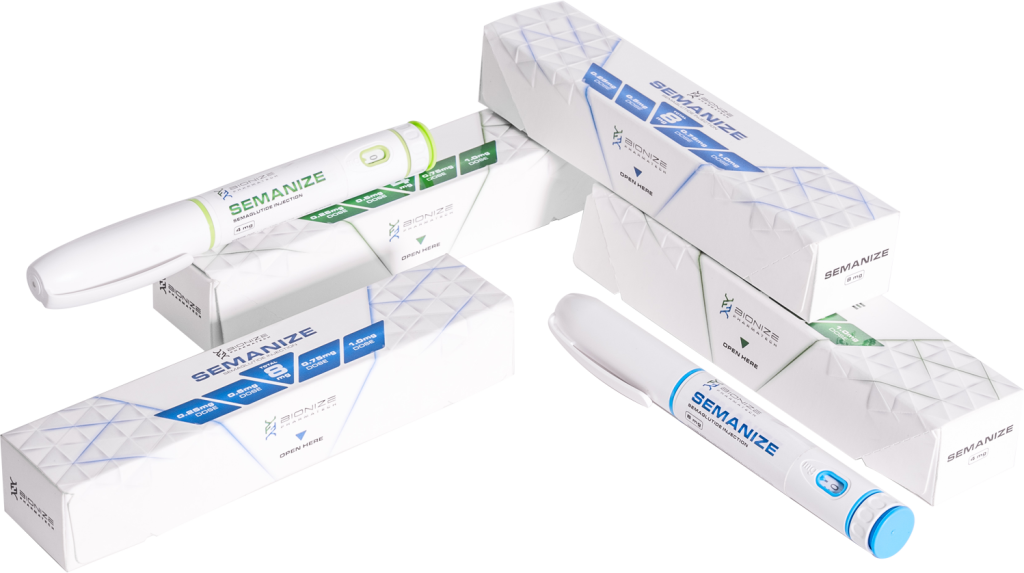
Semaglutide remains the most widely studied and clinically familiar GLP-1 therapy.
How It Works
- Targets GLP-1 receptors only
- Reduces appetite and caloric intake
- Improves glycemic control primarily through appetite modulation
Treatment Profile
- ~14–15% average weight loss over ~68 weeks
- FDA-approved with extensive long-term safety data
- Predictable dose–response curve
Best-Fit Metabolic Profile
Semaglutide performs best for individuals who:
- Respond well to appetite suppression alone
- Prioritize safety, predictability, and long-term data
- Are sensitive to high-intensity gastrointestinal side effects
- Require cost- or access-driven treatment decisions
In practice, semaglutide often underperforms when escalation is rushed. Outcomes improve when dosing remains conservative and focused on the lowest effective dose, rather than maximum intensity.
Tirzepatide Dual-Receptor Balance of Power
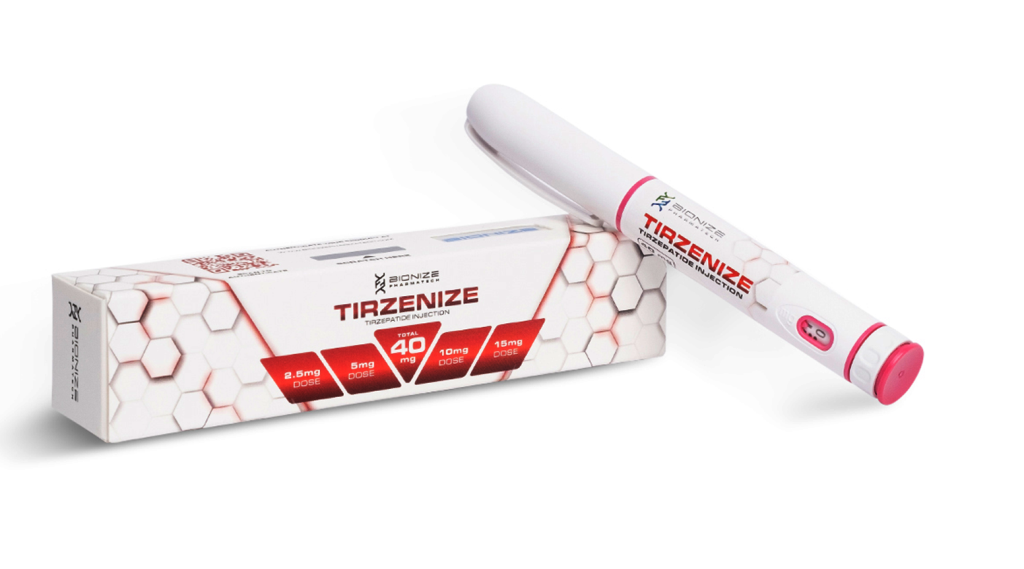
Tirzepatide adds GIP receptor activation, introducing a second metabolic pathway beyond appetite control.
How It Works
- Activates GLP-1 and GIP receptors
- Enhances insulin sensitivity more directly
- Improves fat-cell signaling and nutrient partitioning
- Often effective without extreme appetite suppression
Treatment Profile
- ~20–21% average weight loss over ~72 weeks
- FDA-approved
- Frequently effective in individuals who plateau on GLP-1–only therapy
Best-Fit Metabolic Profile
Tirzepatide is particularly suited for:
- Individuals with insulin resistance or metabolic syndrome
- Patients who respond incompletely to semaglutide
- Those seeking stronger efficacy without severe tolerability trade-offs
In current clinical practice, tirzepatide is often considered the best balance between efficacy, tolerability, and real-world usability.
Retatrutide Triple-Receptor Potential With Real-World Trade-Offs
Retatrutide expands the mechanism further by activating the glucagon receptor associated with increased energy expenditure.
How It Works
- Activates GLP-1, GIP, and glucagon receptors
- May increase basal metabolic rate
- May shift body composition toward greater fat loss
- Introduces additional metabolic signaling beyond appetite suppression
Treatment Profile
- ~28.7% average weight loss over ~68 weeks (trial data)
- Phase 3 trials completed
- Not FDA-approved at the time of writing
Practical Limitations
Despite impressive headline numbers, retatrutide introduces meaningful challenges:
- Higher dropout rates at higher doses
- More intense gastrointestinal symptoms in some users
- Increased incidence of sensory side effects (e.g., dysesthesia)
- Appetite suppression may feel less pronounced for certain individuals
- Limited long-term cardiovascular and real-world safety data
Retatrutide’s maximum efficacy appears tied to higher physiological burden, making tolerability a defining constraint rather than a secondary concern.
Retatrutide vs Tirzepatide: Where the Difference Actually Matters
At first glance, retatrutide appears to be a direct upgrade over tirzepatide. One more receptor, higher average weight loss, stronger metabolic signaling.
In reality, the difference is conditional. Tirzepatide’s strength lies in metabolic efficiency. By combining GLP-1 and GIP, it improves insulin sensitivity and fat metabolism without heavily relying on metabolic stress. For many individuals, this produces consistent fat loss that compounds over time.
Retatrutide shifts the equation toward metabolic intensity. The added glucagon activation can accelerate energy expenditure, but also increases physiological demand. Once dose reductions, symptom management, and adherence challenges are considered, the marginal benefit over tirzepatide often narrows.
For many patients, tirzepatide already sits near the optimal point on the efficacy–tolerability curve.
Weight-Loss Numbers Without Context Can Mislead

| Medication | Duration | Average Weight Loss |
| Semaglutide 2.4 mg | 68 weeks | ~14.9% |
| Tirzepatide 15 mg | 72 weeks | ~20.8% |
| Retatrutide 12 mg | 68 weeks | ~28.7% |
These results do not come from head-to-head trials. Differences in populations, protocols, and escalation strategies limit direct comparison. In real-world settings, outcomes frequently diverge from trial averages.
Tolerability and Dropout Rates: The Hidden Cost of “More”
| Medication | Discontinuation Rate |
| Semaglutide | ~5–7% |
| Tirzepatide | ~7–10% |
| Retatrutide | ~12–18% |
While nausea, vomiting, diarrhea, constipation, and appetite suppression are common across all GLP-1 therapies, retatrutide shows higher treatment discontinuation, especially at higher doses.This highlights a fundamental principle of metabolic therapy: Efficacy without adherence has no clinical value.
GLP-1 Therapy Is a Spectrum—Not a Single Tool
GLP-1 therapy is often discussed as if all agents behave similarly. This oversimplification leads to mismatched expectations and avoidable failure.
In reality, GLP-1–based therapies exist on a spectrum of metabolic intervention:
- Semaglutide emphasizes appetite control
- Tirzepatide balances appetite and insulin signaling
- Retatrutide pushes toward metabolic acceleration
Success depends on choosing the point on this spectrum that aligns with physiology not ambition.
GLP-1 Therapy and the Myth of Linear Escalation
A common assumption is that escalation should be linear:
If one drug works, a stronger one must work better.
GLP-1 therapy does not scale this way. Beyond a certain point, increasing pharmacological force can reduce adherence faster than it improves outcomes.
Many plateaus occur not because the drug failed but because the therapy outpaced the patient’s tolerance or lifestyle capacity.
Availability and Timing Matter
| Medication | Current Status |
| Semaglutide | Available now |
| Tirzepatide | Available now |
| Retatrutide | Projected ~2027 |
For individuals seeking treatment today, retatrutide remains a future option not a practical one.
Why Medication Choice Explains Only Part of the Outcome
Across real-world datasets, a consistent pattern emerges:
Medication choice accounts for roughly 20% of long-term success.The remaining 80% depends on:
- Dosing speed and escalation discipline
- Side-effect management
- Insulin resistance correction
- Metabolic flexibility development
- Nutrition and behavioral integration
- Long-term maintenance or exit planning
Even the most advanced molecule will underperform if these fundamentals are ignored.
The Real Takeaway: Fit Beats Firepower
By headline numbers alone, retatrutide appears superior.Its triple-receptor mechanism delivers the largest average weight loss observed to date but efficacy does not exist in isolation.
As receptor complexity increases, so does physiological burden. Higher rates of intolerance and discontinuation mean that a drug with greater theoretical power may deliver less real-world benefit for certain individuals.
In practice, the most successful outcomes are achieved not by those using the strongest medication but by those who can tolerate, adhere to, and sustain a therapy over time.
The right GLP-1 strategy is defined not by maximum receptor activation, but by alignment between:
- metabolic needs
- side-effect tolerance
- dosing flexibility
- long-term adherence capacity
When treatment aligns with physiology rather than hype, results become not only larger but durable.
FAQ
Should I wait for retatrutide instead of starting semaglutide or tirzepatide now?
For most individuals, waiting offers little benefit. Semanize Semaglutide and tirzepatide are available, well-studied, and effective when implemented thoughtfully. Delaying treatment may postpone meaningful metabolic improvement.
Does higher weight loss always mean better long-term results?
Not necessarily. Higher short-term loss often correlates with higher dropout rates. Long-term success depends more on tolerability, adherence, and sustainable metabolic planning than on peak numbers.

